
Full Text · HTML
6,147 words · about 28 min read · open access under CC BY 4.0
Contents
Abstract
The study examines the effectiveness of social media influencer marketing in improving hotel performance, with particular reference to the role of hotel segments in Chennai. Social media influencer marketing has emerged as an important promotional strategy for hotels to enhance brand visibility, attract potential customers, strengthen customer engagement, and improve business performance. The study specifically focuses on two dimensions of influencer marketing, namely Macro and Mega Influencer Marketing and Micro and Nano Influencer Marketing, and investigates their influence on hotel segments and overall hotel performance. A descriptive research design was adopted, with a sample size of 200 respondents selected through the snowball sampling technique. Primary data were collected using a structured questionnaire, and path analysis was employed to examine the direct relationships among the study variables. The findings reveal that Macro and Mega Influencer Marketing has a positive and statistically significant influence on hotel segments, whereas Micro and Nano Influencer Marketing has a positive but statistically insignificant influence. Furthermore, hotel segments significantly influence hotel performance. Both Macro and Mega Influencer Marketing and Micro and Nano Influencer Marketing have positive and statistically significant effects on hotel performance. The results highlight the importance of influencer marketing strategies in strengthening hotel performance and indicate that hotel management should strategically select influencers according to their promotional objectives and target customer segments. The study concludes that effective integration of different categories of social media influencers can contribute to improving the competitive position and performance of hotels in Chennai
1. Introduction
The rapid development of digital technology and social networking platforms has transformed the marketing strategies adopted by the hotel industry. Social media influencer marketing has emerged as an effective promotional approach through which hotels communicate their services, facilities, accommodation experiences, food and beverage offerings, and hospitality standards to potential customers. Platforms such as Instagram, YouTube, Facebook, and other digital channels enable influencers to share hotel experiences through photographs, videos, reviews, recommendations, and travel-related content. Unlike traditional advertising, influencer marketing creates opportunities for hotels to establish direct relationships with target customers through credible, engaging, and experience-oriented communication. The effectiveness of influencer marketing depends on the influencer's popularity, credibility, expertise, attractiveness, audience engagement, and relevance to the hotel's target market. Influencer-generated content can influence customer awareness, perceived value, brand image, booking intentions, and hotel patronage. Research by Kapoor et al., (2021), Horng et al., (2024), Hernández-Méndez and Baute-Díaz (2024), and Bastrygina et al., (2024) highlights the growing significance of social media influencers in shaping consumer perceptions and marketing outcomes in the tourism and hospitality industries.
Social media influencer marketing can broadly be classified into two important categories: Macro and Mega Influencer Marketing and Micro and Nano Influencer Marketing. Macro and mega influencers generally possess larger follower networks and wider audience reach, making them suitable for creating extensive brand awareness, improving hotel visibility, promoting premium accommodation facilities, and attracting customers from different geographical locations. Mega influencers are particularly useful for large-scale promotional campaigns, while macro influencers can help hotels communicate with specific but comparatively extensive audience groups. Their promotional activities can generate considerable online exposure, strengthen hotel brand recognition, and influence potential customers' perceptions of service quality. In contrast, micro and nano influencers generally have smaller but more focused and closely connected audiences. Their recommendations are often perceived as personal, authentic, relatable, and trustworthy, which can encourage customer interaction, online enquiries, booking intentions, and customer loyalty. Hernández-Méndez and Baute-Díaz (2024) examined the promotional roles of different influencer categories in tourism, while Kapoor et al., (2021), Horng et al., (2024), and Huang et al., (2026) provide relevant evidence concerning influencer credibility, consumer responses, and marketing effectiveness in hospitality contexts.
Hotel performance represents the extent to which hotels achieve their business objectives through improved occupancy rates, room revenue, profitability, customer satisfaction, brand reputation, repeat bookings, and competitive positioning. Influencer marketing can contribute to these performance outcomes by generating customer interest, strengthening online visibility, encouraging positive electronic word-of-mouth, and influencing accommodation purchase decisions. The relationship between influencer marketing and hotel performance may differ according to the characteristics and positioning of individual hotels. In this context, hotel segments play an important moderating role because luxury hotels, five-star hotels, four-star hotels, three-star hotels, budget hotels, and boutique hotels differ in their target customers, service offerings, pricing strategies, promotional budgets, and customer expectations. Luxury and premium hotels may benefit from macro and mega influencers who can communicate exclusivity, premium experiences, and prestigious brand images, whereas budget, midscale, and boutique hotels may achieve better customer engagement through micro and nano influencers who provide authentic recommendations and relatable accommodation experiences. Khaki and Khan (2026) established the positive contribution of social media marketing to hotel performance, while Gomez-Suarez and Veloso (2024), Kapoor et al., (2021), and Huang et al., (2026) provide relevant insights into customer engagement, influencer effectiveness, and marketing outcomes in hospitality and tourism.
Chennai provides an appropriate geographical setting for examining the effectiveness of social media influencer marketing because of its diverse hotel establishments, growing hospitality activities, business travel, tourism, medical tourism, and increasing use of digital platforms for accommodation selection. Hotels in Chennai operate across different market segments and compete to attract domestic and international travelers through service quality, competitive pricing, customer experience, brand positioning, and digital promotional activities. However, the effectiveness of influencer marketing may not be uniform across hotel categories because customers of premium hotels may respond differently to influencer credibility, popularity, and aspirational content compared with customers of budget and midscale hotels who may priorities affordability, accessibility, and genuine customer experiences. Therefore, selecting appropriate influencer categories according to hotel segment s is essential for maximizing marketing effectiveness and improving business performance. Against this background, the present study, entitled "Effectiveness of Social Media Influencer Marketing (Macro and Mega Influencer Marketing and Micro and Nano Influencer Marketing) in Improving Hotel Performance: The Role of Hotel Segments at Chennai," aims to examine the influence of macro and mega influencer marketing and micro and nano influencer marketing on hotel performance, while investigating the moderating role of hotel segments. The study is expected to provide useful insights for hotel owners, managers, and digital marketing professionals in developing appropriate influencer collaboration strategies to improve customer reach, brand awareness, booking intentions, occupancy, revenue generation, and overall hotel performance (Hernández-Méndez & Baute-Díaz, 2024; Bastrygina et al., 2024; Horng et al., 2024; Khaki & Khan, 2026).
2. Review of Literature
2.1 Effectiveness of Social Media Influencer Marketing and Hotel Performance
Social media influencer marketing has emerged as an important promotional strategy in the hospitality and tourism industry, influencing customer awareness, brand image, engagement, booking intentions and hotel patronage. Jang et al., (2021), in their study entitled The Role of Engagement in Travel Influencer Marketing: The Perspectives of Dual Process Theory and the Source Credibility Model, examined the influence of follower numbers, engagement and source credibility on travel-related decisions. Their findings indicated that influencer engagement and follower size influence advertising effectiveness under different levels of consumer advertising skepticism. Kapoor et al., (2022), in Effectiveness of Travel Social Media Influencers: A Case of Eco-Friendly Hotels, investigated how influencer message quality and sponsorship disclosure affect customers' perceptions of hotel sustainability and their intention to stay. The study established that informative and value-based sponsored messages are more effective in influencing hotel patronage intentions. Hernández-Méndez and Baute-Díaz (2024), in Influencer Marketing in the Promotion of Tourist Destinations: Mega, Macro and Micro-Influencers, analyzed the effectiveness of different influencer categories using 236 Instagram users and demonstrated the importance of influencer credibility and audience attitudes in influencing travel decisions. Polat et al., (2024), in Past, Present, and Future Scene of Influencer Marketing in Hospitality and Tourism Management, reviewed 75 studies and identified influencer authenticity, celebrity endorsement, travel blogs, vlogs and destination marketing as important research themes in hospitality and tourism. Similarly, Bastrygina et al., (2024), in Unraveling the Power of Social Media Influencers: Qualitative Insights into the Role of Instagram Influencers in the Hospitality and Tourism Industry, explored the contribution of Instagram influencers to consumer engagement and hospitality marketing outcomes, highlighting the importance of influencer communication and audience relationships. These studies collectively indicate that macro and mega influencers can support hotels in achieving wider brand visibility and market reach, whereas micro and nano influencers can provide opportunities for more personalized communication, audience interaction and perceived authenticity.
The relationship between influencer marketing and hospitality business outcomes, particularly customer engagement, brand trust, purchase intention and patronage. Sutrisno et al., (2024), in Disentangling Digital Influences on Tourist Behavior: The Role of Trust and Destination Image in the Social Media Era, investigated influencer credibility, content quality, visual attractiveness and social engagement, identifying tourist trust and destination image as important factors influencing visit intention. Ong et al., (2024), in Understanding Followers’ Processing and Perceptions of Social Media Influencer Destination Marketing: Differences between Millennials and Gen Zs, examined how different generations process influencer-generated destination marketing information and how such perceptions shape travel decisions. Huang et al., (2026), in Meta-Analysis of Influencer Marketing Effectiveness in Tourism and Hospitality, synthesized 25 studies involving 36,908 tourists and identified influencer trustworthiness, expertise, authenticity, attractiveness, parasocial interaction and information quality as important determinants of influencer marketing effectiveness. Alizadeh et al., (2026), in Influencer Marketing in Hospitality and Tourism: A Systematic Literature Review and Research Agenda, reviewed 163 journal articles and developed a framework highlighting the relationships among suppliers, influencers and target audiences, while identifying further research opportunities in hospitality influencer marketing. John and Supramaniam (2026), in Influencer Marketing and Tourist Behaviour: A Systematic Literature Review of Attitudes, Intentions and Behaviours in Tourism, reviewed 304 journal articles and developed an integrated framework explaining the influence of influencer marketing on tourist attitudes, intentions and behavioural responses. Collectively, these studies suggest that influencer marketing can contribute to hotel performance through improved brand awareness, customer engagement, online reputation, booking intentions and customer acquisition. However, there remains scope for examining the comparative effectiveness of macro and mega influencer marketing versus micro and nano influencer marketing across different hotel segments. In particular, the proposed study in Chennai can investigate whether the effectiveness of these influencer categories differs among luxury, upscale, midscale and budget hotels, thereby establishing hotel segments as a moderating variable in the relationship between social media influencer marketing and hotel performance. Hence, the hypothesis is HO: Effectiveness of social media influencer marketing (macro and mega influencer marketing and micro and nano influencer marketing) has a significant positive influence on hotel performance in Chennai.
2.2 Effectiveness of Social Media Influencer Marketing and Hotel Segments
Social media influencer marketing has emerged as an important digital promotional strategy for improving hotel visibility, customer engagement, brand image, booking intentions and overall hotel performance. Influencers can be broadly classified into Macro and Mega Influencers and Micro and Nano Influencers, based on their follower reach, audience characteristics, engagement levels and credibility. Alizadeh, Leung, and Gursoy (2026), in their systematic literature review, examined 163 journal articles and identified the growing significance of influencer marketing in hospitality and tourism, highlighting influencer characteristics, marketing strategies and consumer responses as important research dimensions. Similarly, Huang et al., (2026), through a meta-analysis of 25 studies involving 36,908 tourists, established that influencer trustworthiness, expertise, authenticity, attractiveness and relational factors significantly influence tourists' behavioural intentions. Javed et al., (2025) reviewed 80 journal articles and highlighted the increasing contribution of social media influen cers to tourism and hospitality marketing through consumer engagement, destination image and travel decision-making. Saini, Kumar, and Oberoi (2023) conducted a systematic literature review of 36 publications and emphasized that influencer credibility, follower engagement, content quality and consumer trust play significant roles in influencing travel decisions. Furthermore, the review by Alizadeh et al., (2026) suggests that hotels should integrate influencer characteristics with their promotional objectives to achieve stronger marketing outcomes. These findings indicate that macro and mega influencers are particularly useful for creating extensive brand awareness and reaching larger audiences, whereas micro and nano influencers can help hotels develop personalized communication, audience trust and stronger customer relationships. Consequently, different categories of hotels, including luxury, five-star, four-star, three-star and budget hotels, can adopt different influencer marketing strategies according to their target customers and promotional objectives.
Bastrygina et al., (2024) explored the role of Instagram influencers in hospitality and tourism and highlighted the importance of influencer credibility, consumer engagement and the behavioural outcomes of influencer-generated content. Their findings provide useful insights into how hotels can utilize influencer partnerships to strengthen customer relationships and encourage patronage. In addition, the systematic review by John and Supramaniam (2026), which synthesized 304 journal articles, emphasized the influence of social media marketing on tourists' attitudes, intentions and behavioural decisions. The narrative review by Waluyo and co-authors (2026) further examined travel influencers and identified important research themes, theoretical approaches and future research opportunities in tourism and hospitality. Sun et al., (2026) synthesized 62 empirical studies using meta-analysis and identified the importance of informational, normative and value-expressive influencer characteristics in shaping tourist behavioural intentions. Akram and Majeed (2026) also reviewed tourism influencer marketing and highlighted the contribution of influencer credibility, trust and social media communication to tourist decision-making. These studies collectively suggest that the effectiveness of influencer marketing may differ according to hotel segments. Macro and mega influencers can help luxury and premium hotels enhance brand recognition, communicate exclusive experiences and attract high-value customers, while micro and nano influencers can provide more authentic recommendations and localized engagement for budget, economy and mid-range hotels. For hotels operating in Chennai, selecting appropriate influencer categories according to hotel classification, customer expectations, service quality and marketing budgets may improve brand awareness, customer acquisition, occupancy rates, room revenue and competitive positioning. However, the relationship between influencer categories and hotel performance across different hotel segments in Chennai remains an important area for empirical investigation. The proposed research therefore seeks to examine how macro and mega influencer marketing and micro and nano influencer marketing contribute to hotel performance, while considering hotel segments as an important moderating or grouping variable. Hence, the hypothesis is HO: Effectiveness of social media influencer marketing (macro and mega influencer marketing and micro and nano influencer marketing) has a significant positive influence on hotel segments in Chennai.
2.3 Hotel Segments and Hotel Performance
Hotel segments play an important moderating role in determining the effectiveness of social media influencer marketing in improving hotel performance. Hotels can be broadly classified into luxury hotels, five-star hotels, four-star hotels, three-star hotels, boutique hotels, business hotels and budget hotels, each catering to customers with different expectations, purchasing power and service preferences. Alizadeh et al., (2026), in their systematic literature review of influencer marketing in hospitality and tourism, examined 163 journal articles and highlighted the importance of influencer characteristics, communication strategies and target-market relationships in achieving marketing effectiveness. Similarly, Javeda et al., (2025) reviewed 80 journal articles and identified the growing significance of social media influencers in tourism and hospitality management, particularly in strengthening brand awareness, customer engagement and behavioural intentions. Huang et al., (2026), through a meta-analysis of 25 studies involving 36,908 tourists, established the importance of influencer credibility, expertise, authenticity and attractiveness in influencing tourism and hospitality-related consumer responses. Sun et al., (2026) synthesized evidence from 62 empirical studies and explained how informational, normative and value-expressive influencer characteristics influence customer identification, internalization and behavioural intentions. These studies indicate that macro and mega influencers are particularly useful for luxury and premium hotel segments because their extensive reach and visibility can strengthen brand recognition, destination image and market positioning. In contrast, micro and nano influencers can be particularly effective for boutique, budget and mid-scale hotels because their perceived authenticity, local connections and personalized communication can develop customer trust and engagement.
Hotel performance is another important dimension in evaluating the effectiveness of social media influencer marketing, as it includes room occupancy, revenue generation, customer acquisition, brand reputation, customer satisfaction, repeat bookings and competitive advantage. Khaki and Khan (2026) investigated social media marketing and hotel performance among 389 hotel managers and owners in Jammu and Kashmir and found that social media marketing significantly improved hotel performance, with customer relat ionship management capabilities partially mediating the relationship. Their findings emphasize that hotels must integrate digital marketing activities with customer relationship management to achieve sustainable business outcomes. Raj and Chinnadurai (2026) examined influencer marketing and hotel room occupancy in Chennai and found that nano influencers and micro influencers positively influenced purchase intention and room occupancy, demonstrating the importance of smaller influencers in generating actual hotel business outcomes. Furthermore, the 2026 study on influencer marketing and hotel revenue per available room (RevPAR) highlighted the contribution of social media platforms and purchase intention to hotel revenue performance. The 2026 study on influencer type and message content in hospitality also demonstrated that macro influencers can generate greater digital engagement, whereas micro influencers can strengthen perceived authenticity and patronage intentions. These findings suggest that the effectiveness of macro, mega, micro and nano influencer marketing may differ according to hotel segments, customer profiles and marketing objectives. In the Chennai hotel industry, luxury and star-category hotels may benefit from macro and mega influencers to enhance brand visibility and premium positioning, whereas budget, economy and boutique hotels may obtain stronger customer engagement and booking intentions through micro and nano influencers. Therefore, investigating hotel segments as a moderating variable provides an opportunity to understand how different categories of social media influencers contribute to hotel performance across various hotel segments in Chennai. Hence, the hypothesis is HO: Hotel segments have a significant positive influence on hotel performance in Chennai.
2.4 Research Gap
Although previous studies have examined the effectiveness of social media influencer marketing in promoting hospitality and tourism services, limited research has comparatively investigated the influence of macro and mega influencers and micro and nano influencers on different dimensions of hotel performance. In particular, insufficient attention has been given to how hotel segments (such as luxury, upscale, midscale and budget hotels) moderate the relationship between influencer marketing strategies and hotel performance. Furthermore, empirical evidence focusing specifically on the hotel industry in Chennai is limited. Therefore, the present study attempts to fill this research gap by comparing the effectiveness of different categories of social media influencers in improving hotel performance and examining the role of hotel segments in determining the effectiveness of influencer
2.5 Need for the Study
The rapid growth of social media platforms has transformed hotel marketing by providing opportunities to reach potential customers through influencers with different audience sizes and engagement levels. Macro and mega influencers offer wider audience reach and brand visibility, whereas micro and nano influencers can generate greater audience interaction, trust and personalised recommendations. However, the effectiveness of these influencer categories in improving hotel performance may vary according to hotel segments, such as budget, mid- scale, upscale and luxury hotels. Therefore, there is a need to examine the comparative effectiveness of macro and mega influencer marketing and micro and nano influencer marketing in enhancing hotel performance in Chennai. The study is essential to understand the role of hotel segments in influencing marketing outcomes and to help hotel management select suitable influencer strategies to improve brand awareness, customer attraction, occupancy rates, revenue generation
2.6 Statement of the Problem
The hotel industry in Chennai is increasingly adopting social media influencer marketing to attract customers, enhance brand visibility, increase bookings, and improve overall hotel performance. However, the effectiveness of influencer marketing may vary depending on the type of influencer, particularly macro and mega influencers compared with micro and nano influencers, as well as the hotel segment in which the marketing strategy is implemented. While larger influencers offer extensive audience reach and brand exposure, smaller influencers may provide greater audience engagement, credibility, and trust. Despite the growing adoption of these promotional strategies, hotels face challenges in identifying the most effective influencer category to achieve better marketing and business outcomes. Moreover, limited understanding exists regarding how different hotel segments influence the relationship between influencer marketing and hotel performance. Therefore, the present study aims to examine the effectiveness of macro and mega influencer marketing and micro and nano influencer marketing in improving hotel performance, with particular emphasis on the moderating role of hotel segments in Chennai.
3. Research Methodology
The present study, entitled “Effectiveness of Social Media Influencer Marketing (Macro and Mega Influencer Marketing and Micro and Nano Influencer Marketing) in Improving Hotel Performance: The Role of Hotel Segments in Chennai,” adopts a systematic research methodology to examine the influence of social media influencer marketing on hotel performance. The study focuses on two major categories of influencer marketing, namely macro and mega influencer marketing and micro and nano influencer marketing, while considering hotel segments as an important contextual variable. A structured questionnaire is used to collect primary data from hotel customers in Chennai. The research methodology is designed to examine the relationships among the study variables and assess the mediating or intervening role of hotel segments in the relationship between influencer marketing and hotel performance (Lou & Yuan, 2019; Vrontis et al., 2021).
3.1 Research Design
The study adopts a quantitative research approach to collect and ana lyse numerical information regarding customers' perceptions of social media influencer marketing and hotel performance. A structured questionnaire is developed based on the objectives and variables of the study. The research examines the effectiveness of different categories of social media influencers and evaluates whether the relationship between influencer marketing and hotel performance varies according to hotel segments. The collected data are analysed using appropriate statistical techniques, including descriptive statistics, reliability analysis, validity assessment and path analysis (Sokolova & Kefi, 2020; Vrontis et al., 2021).
3.2 Descriptive Research Design
The present study follows a descriptive research design to understand customers' perception s, opinions and experiences regarding social media influencer marketing in the hotel industry at Chennai. Descriptive research helps identify the demographic characteristics of respondents, the effectiveness of macro and mega influencers, the effectiveness of micro and nano influencers, different hotel segments and perceived hotel performance. The study also uses path analysis to examine the direct and indirect relationships among the research variables. This design is appropriate because it provides a systematic understanding of the existing marketing practices and their association with hotel performance (Sokolova & Kefi, 2020; Vrontis et al., 2021).
3.3 Measurement of Research Variables
The study consists of four major measurement components: demographic profile, effectiveness of social media influencer marketing, hotel segments and hotel performance. A structured questionnaire containing 27 items is used to measure the research variables, excluding the seven demographic questions. The influencer marketing construct is divided into macro and mega influencer marketing and micro and nano influencer marketing, with five items allocated to each dimension. Hotel segments and hotel performance are measured using five items each. The questionnaire is developed with reference to the objectives of the study and relevant influencer marketing literature (Lou & Yuan, 2019; Vrontis et al., 2021). Note: Reliability and validity figures are based on the values supplied for the study. The validity range of 0.304–0.732 is reported for the influencer marketing construct; separate validity coefficients for the other constructs should be established from the collected data.
3.4 Population of the Study
The population of the present study comprises customers of the hotel industry in Chennai, Tamil Nadu. The study considers customers who have experience with hotels and exposure to social media content, including influencer- generated hotel reviews, recommendations, promotional videos and travel-related posts. These respondents are selected because their opinions and experiences are useful in evaluating the effectiveness of social media influencer marketing and its relationship with hotel performance. The inclusion of customers from different hotel segments helps examine whether influencer marketing effectiveness differs across hotel categories (Sokolova & Kefi, 2020; Khaki & Khan, 2024).
3.5 Sample Size
The sample size for the present study is fixed at 200 respondents from the hotel industry in Chennai. The respondents are selected to obtain information about their perceptions of macro and mega influencer marketing, micro and nano influencer marketing, hotel segments and hotel performance. A sample of 200 respondents is used for the statistical examination of the proposed research framework through path analysis. The sample provides the primary data required to investigate the relationships among the study variables (Vrontis et al., 2021; Khaki & Khan, 2024).
3.6 Sampling Technique
The study adopts the snowball sampling technique, which is a non-probability sampling method. Initially, a few eligible hotel customers are identified and requested to participate in the survey. Subsequently, these respondents are encouraged to refer other customers who satisfy the study requirements. This p rocedure helps reach respondents from different hotel segments and customer groups in Chennai. Snowball sampling is considered suitable for reaching participants through existing respondent networks, although the findings should be interpreted with consideration of possible selection and referral bias (Sokolova & Kefi, 2020; Vrontis et al., 2021).
3.7 Data Collection Method
The study uses primary data collected through a structured questionnaire from 200 hotel customers in Chennai. The questionnaire contains questions relating to demographic characteristics, influencer marketing effectiveness, hotel segments and hotel performance. Respondents are requested to express their opinions based on their exposure to social media influencer promotions and hotel-related experiences. The collected responses are coded, classified and entered into statistical software for further analysis. A consistent questionnaire structure helps measure the perceptions of respondents across the different dimensions of the study (Lou & Yuan, 2019; Khaki & Khan, 2024).
3.8 Reliability and Validity
Reliability analysis is conducted to assess the internal consistency of the questionnaire items. The overall reliability coefficient of social media influencer marketing is 0.87, while macro and mega influencer marketing records 0.89 and micro and nano influencer marketing records 0.85. Hotel segments and hotel performance report reliability coefficients of 0.88 and 0.82, respectively. Since all the reported Cronbach's alpha values exceed the commonly accepted threshold of 0.70, the scales demonstrate satisfactory internal consistency. Content and construct validity should also be assessed to establish whether the questionnaire adequately represents the intended concepts (Lou & Yuan, 2019; Vrontis et al., 2021).
3.9 Path Analysis
Path analysis is used as the principal statistical technique to examine the proposed research framework. It helps determine the extent to which macro and mega influencer marketing and micro and nano influencer marketing influence hotel performance. It also helps examine the role of hotel segments in these relationships through appropriate interaction, moderation or group-comparison analysis, depending on the proposed hypotheses. The analysis provides standardized path coefficients, critical ratios or test statistics, significance levels and explanatory power to evaluate the proposed relationships. This approach is suitable for examining interconnected relationships among the research constructs (Lou & Yuan, 2019; Vrontis et al., 2021).
4. Results and Discussion
Source: Primary data Table 1 explains the goodness of fit of the proposed research model examining the effectiveness of social media influencer marketing (Macro and Mega Influencer Marketing and Micro and Nano Influencer Marketing) in improving hotel performance, with the role of hotel segments in Chennai. The results indicate that the Chi-square value is 2.859, with a p-value of 0.091, which is greater than 0.05, demonstrating an acceptable model fit. The goodness-of-fit indicators, namely GFI (0.993), AGFI (0.929), CFI (0.990), and NFI (0.985), exceed the recommended threshold of 0.90, indicating an excellent level of model fit. Similarly, the badness-of-fit indicators, RMR (0.016) and RMSEA (0.047), are below the recommended value of 0.080, confirming a close approximation between the hypothesized model and the observed data. These findings establish that the proposed research model has an excellent overall fit and is suitable for further analysis of the relationships between social media influencer marketing and hotel performance across different hotel segments in Chennai (Velaudham & Baskar, 2015a; Velaudham & Baskar, 2015b; Velaudham & Baskar, 2016; Premapriya et al., 2016; Velaudham & Baskar, 2017; Deepak et al., 2019; Josephine Reena et al., 2019; Indra et al., 2020; Hariprabhu Dhakal et al., 2025; Hariprabhu Dhakal et al., 2026; Hariprabhu Dhakal et al., 2026a).
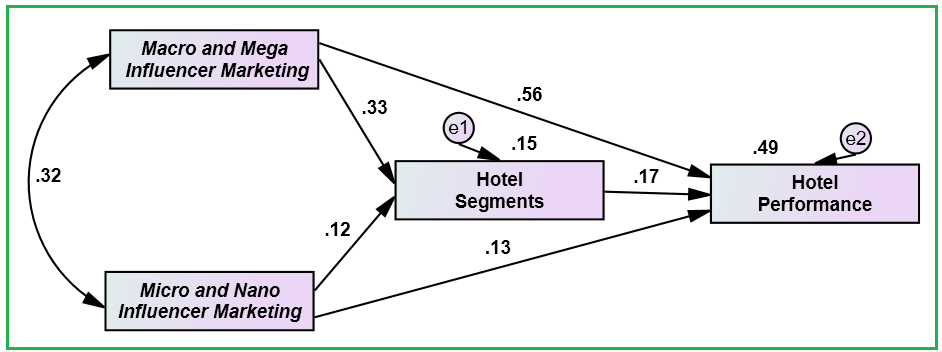
Source: Primary data The regression weights presented in Table 2 examine the influence of macro and mega influencer marketing and micro and nano influencer marketing on hotel segments and hotel performance in Chennai. The results indicate that macro and mega influencer marketing has a positive and statistically significant influence on hotel segments, with an estimated coefficient of 0.332, standard error of 0.083 and critical ratio of 4.810 (p = 0.001). This indicates that macro and mega influencers play an important role in influencing the positioning and promotional effectiveness of different hotel segments. Their extensive audience reach, popularity and wider brand visibility enable hotels to attract potential customers and strengthen their market presence. These findings are consistent with Hernández-Méndez and Baute-Díaz (2024), who examined the promotional effectiveness of different influencer categories in tourism marketing. Similarly, Huang et al., (2026) highlighted the effectiveness of influencer marketing in tourism and hospitality.
The regression results further reveal that micro and nano influencer marketing has a positive relationship with hotel segments, with an estimated coefficient of 0.185, standard error of 0.117 and critical ratio of 1.697. However, the critical ratio indicates that this relationship is not statistically significant at the conventional 5% level (p = 0.090). This suggests that although micro and nano influencers may contribute to promoting different hotel segments through personalized communication, audience engagement and authentic recommendations, their influence on hotel segmentation is comparatively limited in the present study. Their effectiveness may depend on the suitability of the influencer's audience, the nature of hotel services and the promotional objectives. Hernández- Méndez and Baute-Díaz (2024) discussed the different promotional contributions of mega, macro and micro influencers in tourism destinations. Alizadeh et al., (2026) also emphasized the importance of understanding influencer characteristics and their marketing effectiveness in hospitality and tourism.
The table also indicates that hotel segments have a positive and statistically significant influence on hotel performance, with an estimated coefficient of 0.100, standard error of 0.032 and critical ratio of 3.145 (p = 0.002). This finding suggests that the classification and positioning of hotels play an important role in determining their business performance. Different hotel segments may adopt distinct marketing strategies based on their target customers, service quality, pricing policies and market positioning. Effective segmentation enables hotels to develop suitable promotional strategies, improve customer attraction and strengthen their competitive position. These results are supported by Khaki and Khan (2026), who established the positive influence of social media marketing on hotel performance through customer relationship management capabilities. Similarly, Kim and Jang (2021) examined the relationship between social networking site promotions and performance in the lodging industry.
The regression analysis further demonstrates that macro and mega influencer marketing has a positive and statistically significant influence on hotel performance, with an estimated coefficient of 0.385, standard error of 0.039 and critical ratio of 9.874 (p = 0.001). Among the influencer marketing relationships presented in the table, this relationship records the highest critical ratio, indicating a particularly strong statistical association. This finding suggests that macro and mega influencers can contribute considerably to hotel performance through wider promotional reach, increased brand awareness, improved customer attraction and enhanced market visibility. Hotels can utilise these influencers to promote accommodation facilities, hospitality services, special packages and customer experiences to a broader audience. Huang et al., (2026) highlighted the effectiveness of influencer marketing in tourism and hospitality through their meta-analysis. Khaki and Khan (2026) also demonstrated that social media marketing significantly contributes to improving hotel performance.
Finally, the regression results reveal that micro and nano influencer marketing has a positive and statistically significant influence on hotel performance, with an estimated coefficient of 0.119, standard error of 0.049 and critical ratio of 2.416 (p = 0.016). This indicates that micro and nano influencers also contribute to improving hotel performance, although their estimated relationship is comparatively smaller than that of macro and mega influencer marketing. Their effectiveness may be attributed to personalized recommendations, stronger audience relationships, perceived authenticity and targeted promotional communication. Such influencers can help hotels connect with specific customer groups and encourage potential customers to consider their services. Therefore, the findings establish the importance of both influencer categories in improving hotel performance, with macro and mega influencer marketing demonstrating the stronger relationship in the present model. These findings are consistent with Hernández-Méndez and Baute-Díaz (2024) and Alizadeh et al., (2026), who highlighted the significance of influencer categories in tourism and hospitality marketing.
5. Findings and Discussion
The regression results reveal that macro and mega influencer marketing has a positive and statistically significant influence on hotel segments in Chennai. This indicates that collaborations with macro and mega influencers play an important role in influencing the positioning, visibility and promotional effectiveness of different hotel segments. Their extensive follower base, wider audience reach and ability to generate substantial online exposure can help hotels strengthen brand awareness and attract potential customers. In comparison, micro and nano influencer marketing demonstrates a positive but statistically insignificant relationship with hotel segments. Therefore, the study suggests that macro and mega influencers have a comparatively stronger role in influencing hotel segments than micro and nano influencers. These findings can be discussed in relation to the importance of influencer credibility, audience reach and social media engagement in hospitality marketing (Lou & Yuan, 2019; Vrontis et al., 2021).
The findings further establish that hotel segments have a positive and significant influence on hotel performance. Similarly, macro and mega influencer marketing significantly improves hotel performance, indicating that large- scale influencer collaborations contribute considerably to hotel visibility, customer attraction and competitive positioning. Micro and nano influencer marketing also has a positive and statistically significant influence on hotel performance. These findings demonstrate that both c ategories of influencer marketing contribute to improving hotel performance, although macro and mega influencers exhibit a stronger relationship based on their estimated coefficients. This is consistent with research highlighting the influence of influencer type, authenticity and audience engagement on hospitality patronage intentions and hotel marketing outcomes (Ndasi & Cheung, 2026; Horng et al., 2024).
5.1 Managerial Implications
The findings offer important managerial implications for hotel administrat ors, marketing managers and promotional strategists in Chennai. The positive and statistically significant relationship between macro and mega influencer marketing and hotel segments indicates that hotels should strategically collaborate with popular influencers to strengthen brand visibility, attract potential customers and differentiate their services across various hotel categories. The positive influence of macro and mega influencer marketing on hotel performance further suggests that luxury, premium and budget hotels should allocate adequate marketing budgets for influencer partnerships based on their target audiences, promotional objectives and brand positioning. Hotel managers should encourage influencers to create attractive promotional content highlighting accommodation facilities, restaurants, hospitality services, ambience and exclusive customer experiences. Such strategies can improve customer awareness, booking intentions, brand recognition and revenue generation. These implications are consistent with the findings of Roozen (2025) and Hernández-Méndez and Baute-Díaz (2024), who emphasized the importance of influencer characteristics, promotional content and influencer -based communication in strengthening hospitality and tourism marketing effectiveness.
Furthermore, hotel managers should adopt a balanced influencer marketing strategy by integrating micro and nano influencers with macro and mega influencers to achieve better promotional outcomes. The relationship between micro and nano influencer marketing and hotel performance indicates that smaller-scale influencers can also contribute positively to hotel business performance through authentic communication, personalized recommendations and stronger relationships with niche audiences. Therefore, budget and mid-range hotels can collaborate with local food bloggers, travel content creators and Chennai-based lifestyle influencers to promote affordable accommodation, dining experiences and customized hospitality packages. Premium and luxury hotels can combine large-scale influencer campaigns with niche influencer collaborations to improve both market reach and customer engagement. Hotel managers should continuously evaluate influencer campaign effectiveness using indicators such as social media engagement, website traffic, customer enquiries, reservation conversions, customer feedback and return on marketing investment. These recommendations are supported by Horng et al., (2024) and Gomez-Suarez and Veloso (2024), who highlighted the importance of influencer credibility, customer engagement, brand attachment and social media interactions in influencing hotel booking intentions and customer responses.
5.2 Conclusion
The study concludes that social media influencer marketing plays a significant role in improving hotel performance, with hotel segments serving as an important influencing factor in Chennai. Based on descriptive research conducted among 200 respondents using snowball sampling and path analysis, the findings reveal that macro and mega influencer marketing has a positive and statistically significant influence on hotel segments and hotel performance. Similarly, hotel segments positively influence hotel performance, indicating that the effectiveness of influencer marketing varies according to the category and positioning of hotels. Micro and nano influencer marketing also demonstrates a positive influence on hotel segments, although its direct relationship is statistically insignificant based on the reported critical ratio. However, micro and nano influencer marketing has a positive and significant direct influence on hotel performance. Overall, the findings highlight that macro and mega influencers are comparatively more influential in enhancing hotel performance, while micro and nano influencers contribute through targeted and engaging promotional activities. Therefore, hotels in Chennai should adopt a balanced influencer marketing strategy based on their market segments, target customers, promotional objectives and brand positioning to strengthen customer engagement, improve brand visibility and achieve sustainable hotel performance.
5.3 Limitations and Future Research Direction
The present study is subject to certain limitations that provide opportunities for future research. The study is confined to selected hotels in Chennai, with a sample size of 200 respondents and snowball sampling, which may limit the generalizability of the findings to other geographical regions and hotel categories. Further, the study primarily examines macro and mega influencer marketing and micro and nano influencer marketing in relation to hotel performance, considering the role of hotel segments. Future research may extend the investigation to other metropolitan cities and different geographical regions, increase the sample size, and adopt probability sampling techniques to improve representativeness. Researchers may also examine additional variables such as customer engagement, brand trust, online reviews, booking intentions, customer loyalty, and return on investment. Comparative studies across luxury, premium, budget, and boutique hotels, as well as longitudinal studies examining the long-term effects of influencer marketing, would provide deeper insights into how different influencer categories contribute to hotel performance and sustainable competitive advantage.
References
- Akram, S., & Majeed, R. (2026). Influencer marketing in the tourism industry: A systematic review of theories, methods, and findings. Journal of Rural Tourism, 3 (2), 252 –277. https://doi.org/10.70310/jrt.2026.030212111
- Alizadeh, M., Leung, D., & Gursoy, D. (2026). Influencer marketing in hospitality and tourism: A systematic literature review and research agenda. International Journal of Contemporary Hospitality Management, 38(6), 1880–1909. https://doi.org/10.1108/IJCHM-08-2025-1293
- Bastrygina, T., Lim, W. M., Jopp, R., & Weissmann, M. A. (2024). Unraveling the power of social media influencers: Qualitative insights into the role of Instagram influencers in the hospitality and tourism industry. Journal of Hospitality and Tourism Management, 58 , 214 –243. https://doi.org/10.1016/j.jhtm.2024.01.007
- Das, E. (2024). The impact of meaningful influencer collaborations on hospitality businesses. International Journal for Multidisciplinary Research, 6 (5). https://doi.org/10.36948/ijfmr.2024.v06i05.28322
- Gomez-Suarez, M., & Veloso, M. (2024). Enhancing social media engagement by the hospitality industry: The power of customer experience dimensions. Journal of Vacation Marketing, 30(2), 311–326. https://doi.org/10.1177/13567667221135195
- Hariprabhu Dhakal, B., Chinnadurai, P., and Velaudham, C. (2025). Significance of Digital Human Resource Management Practices for Organizational Performance. EPRA International Journal of Economic and Business, 13 (10), 86-92.
- Hariprabhu Dhakal, B., Chinnadurai, P., and Velaudham, C. (2026). Hospital Innovation and its Impact (10), 18-24. https://doi.org/10.56975/ijvra.v4i10.711690
- Hariprabhu Dhakal, B., Chinnadurai, P., and Velaudham, C. (2026a). Influence of Microfinance on Socio-Economic Development of Women Fish Vendors: A Study in Cuddalore District. Journal of Advance and Future Research, 4 (10), 684-697. https://doi.org/10.56975/jaafr.v4i10.515680
- Hernández-Méndez, J., & Baute-Díaz, N. (2024). Influencer marketing in the promotion of tourist destinations: Mega, macro and micro-influencers. Current Issues in Tourism, 27(8), 1332–1342. https://doi.org/10.1080/13683500.2023.2214354
- Horng, J.-S., Liu, C.-H., Chou, S.-F., Yue, T.-Y., & Hu, D.-C. (2024). Role of social media influencers on marketing of sustainable hotels: Gratification and the parasocial interaction perspective. Journal of Hospitality Marketing & Management, 33(6), 735–762. https://doi.org/10.1080/19368623.2024.2315947
- Huang, Z., Fan, A., Huang, Z., & Qi, X. (2026). Meta -analysis of influencer marketing effectiveness in tourism and hospitality. International Journal of Contemporary Hospitality Management, 38(5), 1582– 1603. https://doi.org/10.1108/IJCHM-08-2025-1231
- Indra, M., Balaji, K. & Velaudham, C (2020). Impact of Social Influence and Safety on Purchase Decision of Green Cosmetic. International Journal of Future Generation Communication and Networking, 13 (3), 3036-3042.
- Jang, W., Kim, J., Kim, S., & Chun, J. W. (2021). The role of engagement in travel influencer marketing: The perspectives of dual process theory and the source credibility model. Current Issues in Tourism, 24(17), 2416–2420. https://doi.org/10.1080/13683500.2020.1845126
- Javed, A., Vardarsuyu, M., Can, A. S., & Ekinci, Y. (2025). Social media influencers in tourism and hospitality: A comprehensive review combining bibliometric analysis and systematic literature review. Anatolia, 36(4), 874–904. https://doi.org/10.1080/13032917.2025.2531563
- Javeda, A., Vardarsuyub, M., Canc, A. S., & Ekinci, Y. (2025). Social media influencers in tourism and hospitality: A comprehensive review combining bibliometric analysis and systematic literature review. Anatolia, 36(4), 874–904. https://doi.org/10.1080/13032917.2025.2531563
- John, S. P., & Supramaniam, K. (2026). Influenc er marketing and tourist behaviour: A systematic literature review of attitudes, intentions and behaviours in tourism. International Journal of Tourism Research, 28(1), Article e70226. https://doi.org/10.1002/jtr.70226
- Josephine Reena, A., Kanthiah Alias Deepak, R., Velaudham, C & Manivannan, M. (2019). Influence Of Brand Image On Purchase Intention Towards Fmcg Products. Journal of Emerging Technologies and Innovative Research, 6 (1), 742-745.
- Kanthiah Alias Deepak, R., Velaudham, C & Manivannan, M. (2019). “Gypsy” Narikuravar Community: Problems in Accessing Health Care Services. Indian Journal of Public Health Research & Development, 10 (9), 48-54.
- Kapoor, P. S., Balaji, M. S., Jiang, Y., & Jebarajakirthy, C. (2022). Effectiveness of travel social media influencers: A case of eco -friendly hotels. Journal of Travel Research, 61 (5), 1138 –1155. https://doi.org/10.1177/00472875211019469
- Khaki, A. A., & Khan, T. A. (2024). Social media marketing and its influence on the hotel performance: Mediating role of customer relationship management capabilities. Journal of Vacation Marketing, 32(1). https://doi.org/10.1177/13567667241266968
- Khaki, A. A., & Khan, T. A. (2026). Social media marketing and its influence on the hotel performance: Mediating role of customer relationship management capabilities. Journal of Vacation Marketing, 32(1), 70–90. https://doi.org/10.1177/13567667241266968
- Kim, Y., & Jang, A. (2021). A longitudinal study of sales promotion on social networking sites (SNS) in the lodging industry. Journal of Hospitality and Tourism Management, 48 , 256 –263. https://doi.org/10.1016/j.jhtm.2021.06.016
- Kotgi, V. (2026). A comparative study on the effectiveness of micro, macro, and mega influencers in tourism marketing. International Research Journal of Web.
- Lou, C., & Yuan, S. (2019). Influencer marketing: How message value and credibility affect consumer trust of branded content on social media. Journal of Interactive Advertising, 19 (1), 58 –73. https://doi.org/10.1080/15252019.2018.1533501
- Ndasi, W., & Cheung, M. L. (2026). Navigating influence: A mixed -method study on the role of social media influencer type and message content in driving digital engagement and patronage int entions. International Journal of Hospitality Management, 132 , Article 104401. https://doi.org/10.1016/j.ijhm.2025.104401
- Ong, Y. X., Sun, T., & Ito, N. (2024). Understanding followers’ processing and perceptions of social media influencer destination marketing: Differences between Millennials and Gen Zs. Journal of Hospitality and Tourism Management, 63, 194–207. https://doi.org/10.1016/j.jhtm.2024.07.003
- Polat, E., Çelik, F., Ibrahim, B., & Gursoy, D. (2024). Past, present, and future scene of influencer marketing in hospitality and tourism management. Journal of Travel & Tourism Marketing, 41(3), 322–
- https://doi.org/10.1080/10548408.2024.2317741
- Premapriya, M.S., Velaudham, C. & Baskar, P (2016). Nature of Family Influenced by Consumer Buying behaviour: Multiple Group Analysis Approach. Asian Journal of Research in Social Sciences and Humanities, 6 (9), 908-915.
- Raj, S. V. V. L., & Chinnadurai, P. (2026). Influencer marketing as a driver of hotel revenue per available room (RevPAR): The mediating influence of purchase intention. International Journal for Multidisciplinary Research, 8(4). https://doi.org/10.36948/ijfmr.2026.v08i04.86845
- Roozen, I. (2025). Determinants of an effective Instagram post for the hospitality industry. Journal of Vacation Marketing, 31(2), 519–531. https://doi.org/10.1177/13567667231214632
- Saini, H., Kumar, P., & Oberoi, S. (2023). Welcome to the destination! Social media influencers as cogent determinant of travel decision: A systematic literature review and conceptual framework. Cogent Social Sciences, 9(1), Article 2240055. https://doi.org/10.1080/23311886.2023.2240055
- Sokolova, K., & Kefi, H. (2020). Instagram and YouTube bloggers promote it, why should I buy? How credibility and parasocial interaction influence purchase intentions. Journal of Retailing and Consumer Services, 53, Article 101742. https://doi.org/10.1016/j.jretconser.2019.01.011
- Sun, X., Hua, M., & Li, M. (2026). Social media influencers and their marketing outcomes in tourism and hospitality research: Applying BERTopic analysis and meta-analysis approaches. Journal of Hospitality & Tourism Research. Advance online publication. https://doi.org/10.1177/10963480261446994
- Sutrisno, R., Rafdinal, W., Septyandi, C. B., Gaffar, M. R., & Susanto, E. (2024). Disentangling digital influences on tourist behavior: The role of trust and destination image in the social media era. Journal of Tourism, Hospitality and Travel Management, 2(2), 129–142. https://doi.org/10.58229/jthtm.v2i2.31
- Velaudham, C & Baskar, P (2 015). Influence of Gender in Consumer Buying Behavior towards Air Conditioner in Chennai City. Annamalai Journal of Management, 3-9.
- Velaudham, C & Baskar, P (2015a). Influence of Gender in Consumer Buying Behaviour Towards Air Conditioner in Chennai City. Annamalai Journal of Management, 3-9.
- Velaudham, C & Baskar, P (2015b). Multiple Group Structural Equation Model Showing Influence of Age in Consumer Buying behaviour towards Air Conditioner in Chennai City. Annamalai journal of management, 89-96.
- Velaudham, C & Baskar, P (2016). Number Of Earning Members Influence Over Air Conditioner Buying Behavior: Multiple Group Analysis Approach. Annamalai Business Review, 59-68.
- Velaudham, C & Baskar, P (2017). Rural Women Empowerment through SHG in Dharmapuri Distr ict: Path Analysis Approach. SUMEDHA Journal of Management, Special Issue, 6 (3), 24-31.
- Vrontis, D., Makrides, A., Christofi, M., & Thrassou, A. (2021). Social media influencer marketing: A systematic review, integrative framework and future research agenda. International Journal of Consumer Studies, 45(4), 617–644. https://doi.org/10.1111/ijcs.12647
- Vrontis, D., Makrides, A., Christofi, M., & Thrassou, A. (2021). Social media influencer marketing: A systematic review, integrative framework and future research agenda. International Journal of Consumer Studies, 45(4), 617–644.
- Zhao, Z., Cheng, M., Huang, L., & Waluyo, L. S. (2026). Travel influencers in tourism and hospitality: A narrative review and future research agenda. Asia Pacific Journal of Tourism Research, 31(11), 2331– 2349. https://doi.org/10.1080/10941665.2026.2622400.
© 2026 The Author(s). Open access under the Creative Commons Attribution 4.0 International License (CC BY 4.0). This HTML text was made from the published PDF so it can be read on any device; the PDF is the version of record. A figure or table that could not be reproduced exactly here links to its page in the PDF.