

Full Text · HTML
1,941 words · about 9 min read · open access under CC BY 4.0
Contents
Abstract
Breast cancer is one of the common cancers in women across the world and changes in the BRCA1 gene are a big part of how it starts. Curcumin is a substance found in turmeric and has been shown to have cancer fighting, inflammation reducing and cell protection abilities. In this study the qualities of curcumin as a drug and its ability to attach to the BRCA1 protein were looked at using computer-based methods. The way curcumin moves through the body and its qualities as a drug were estimated using SwissADME. It was tested against BRCA1 (PDB ID: 1JNX) using the CB-Dock2 server. Curcumin had a weight of 368.38 g/mol, a TPSA of 93.06 Ų and a WLOGP of 3.29 with no issues with Lipinski's rule of five. It was able to be absorbed in the gut, did not pass through the blood-brain barrier, was not a substrate for P-glycoprotein and had a bioavailability score of 0.55. Computer modeling showed the best way curcumin attached to BRCA1 with a Vina score of -6.2 kcal/mol in a space called C1 with a size of 225 ų and a center at (19, 69, 27). The findings suggest that curcumin has qualities like a drug and can stick well to BRCA1. It might be a start for developing treatments for breast cancer. More tests in the lab and in living organisms are needed to check if it works well.
1. INTRODUCTION
Breast cancer is one of the most common cancers affecting women worldwide and is a leading cause of cancer- related deaths among women. It occurs when abnormal cells in the breast grow uncontrollably and form a tumour. If not detected early, the cancer can spread to other parts of the body. Although treatment options have improved, breast cancer still remains a major health problem, especially in developing countries like India, where many cases are diagnosed at a later stage.
One of the important genes involved in breast cancer is the Breast Cancer Susceptibility Gene 1 (BRCA1). BRCA1 is a tumour suppressor gene which helps in repairing damaged DNA and controlling cell growth. When BRCA1 is mutated, DNA repair does not work properly, which increases the risk of breast and ovarian cancers. Women with BRCA1 mutations have a much higher lifetime risk of developing breast cancer compared to women without the mutation.
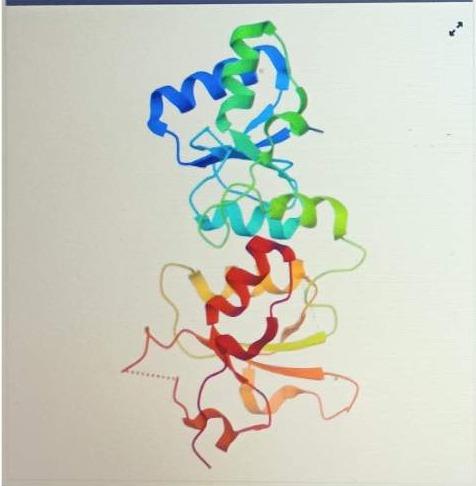
The BRCA1 protein contains a BRCT (BRCA1 C-terminal) domain which plays a key role in DNA damage response and protein-protein interactions. The crystal structure of the BRCT domain (PDB ID: 1JNX) is widely used for studying how small molecules bind to BRCA1 [2,5]. Targeting the BRCT domain with natural compounds is a promising strategy for breast cancer therapy.
Curcumin is the main active compound found in turmeric (Curcuma longa), which is commonly used in Indian food and traditional medicine. Many studies have shown that curcumin has anti-cancer, anti-inflammatory and antioxidant properties. It can stop the growth of cancer cells, induce apoptosis (programmed cell death) and prevent metastasis. Curcumin is also safe, inexpensive and easily available [9].
However, the clinical use of curcumin is limited due to its poor solubility, poor absorption and low bioavailability. Therefore, it is important to study its pharmacokinetic properties and its binding interaction with target proteins before further experimental studies.
To move forward with curcumin as a treatment, it is important to check its drug-like qualities and how it behaves in the body. This includes looking at absorption, distribution, metabolism and excretion.
Computational methods such as ADME prediction and molecular docking are now widely used in drug discovery. These tools are cost-effective, save time and help us understand how a compound behaves before testing it in the lab or in animals [6,8,10].
In this study, two computational methods were used: (i) predicting the pharmacokinetic properties of curcumin using the SwissADME tool [3,6] and (ii) performing blind molecular docking of curcumin with BRCA1 (1JNX) using the CB-Dock2 server [4,7]. This was done to predict how well curcumin binds to the protein, where it binds and what kind of interactions happen. The main goal of this study is to evaluate curcumin as a lead compound for treating breast cancer by targeting the BRCA1 protein.
2. MATERIALS AND METHODS
2.1 Ligand Preparation
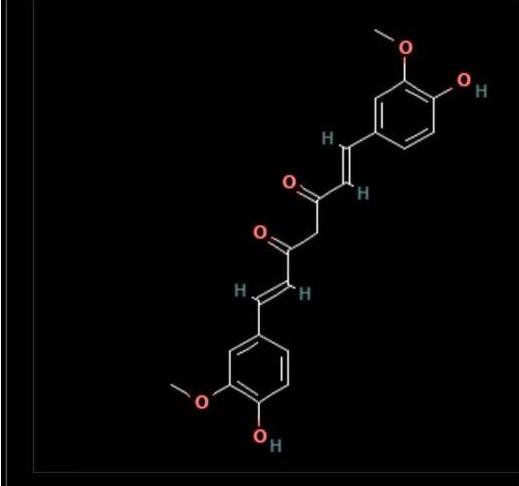
Curcumin, also known as diferuloylmethane, was chosen as the ligand for this study. The 2D and 3D structures of curcumin were retrieved from the PubChem database [1]. The PubChem entry for curcumin has CID 969516 and the molecular formula C21H20O6 with a molecular weight of 368.38 g/mol. These structures were downloaded in SDF format. The SMILES string for curcumin was also obtained from PubChem to use in ADME prediction. The curcumin structure was used for the docking studies.
2.2 Protein Preparation
The crystal structure of the BRCA1 BRCT domain was downloaded from the RCSB Protein Data Bank using PDB ID 1JNX [2]. The BRCA1 structure was cleaned by removing water molecules, heteroatoms and any co- crystallized ligands. Then hydrogen atoms were added to the BRCA1 protein to ready it for docking.
2.3 Prediction of ADME Properties using SwissADME
The SwissADME web tool [3,6] was used to predict the drug-likeness and pharmacokinetic properties of curcumin. The SMILES of curcumin was entered into SwissADME. The tool evaluated parameters: molecular weight, lipophilicity (Log P), water solubility, gastrointestinal absorption, blood-brain barrier permeation, violations of Lipinski's rule of five [8], bioavailability score and synthetic accessibility. SwissADME also applied the BOILED-Egg model [10] to forecast absorption and blood-brain barrier permeation for curcumin.
2.4 Molecular Docking using CB-Dock2
Molecular docking of curcumin against BRCA1 (1JNX) was performed using the CB-Dock2 web server [4,7]. CB-Dock2 automatically identifies the binding cavities of a protein by analyzing its curvature, then docks the ligand into every predicted cavity without the need to specify a binding site. The PDB file of BRCA1 (1JNX) and the SDF file of curcumin were uploaded to the CB-Dock2 server. Docking was run with default settings. CB-Dock2 ranked the resulting binding poses by Vina score, which reflects binding energy in kcal/mol. The pose that had the lowest Vina score and the largest cavity was chosen as the best binding pose. The 2D and 3D interactions such as hydrogen bonds, hydrophobic contacts and which amino acid residues of BRCA1 were involved were examined using the CB-Dock2 visualization tool.
2.5 Analysis of Interactions
The chosen complex was analyzed for hydrogen bond formation, bond lengths, hydrophobic contacts and electrostatic interactions with the key amino acid residues in the binding cavity of BRCA1 (1JNX).
3. RESULTS
3.1 Target Protein Structure (1JNX)
The crystal structure of the BRCT repeat region of BRCA1 (PDB ID: 1JNX) was retrieved from the RCSB Protein Data Bank [2,5]. The structure contains two BRCT domains arranged next to each other, connected by a linker region, forming the characteristic tandem BRCT fold. This region helps in recognizing phospho- peptides. It is very important in DNA damage response and repair.
3.2 Ligand Structure (Curcumin)
The two-dimensional structure of curcumin (PubChem CID: 969516) was retrieved from PubChem [1]. Curcumin is a diarylheptanoid with two feruloyl groups connected by an alpha,beta-unsaturated 1,3-diketone chain. Its chemical formula is C21H20O6 and its molecular weight is 368.38 g/mol.
3.3 ADME and Drug-Likeness Prediction
The ADME and drug-likeness properties of curcumin were predicted using SwissADME. Curcumin has a molecular weight of 368.38 g/mol, 6 hydrogen bond acceptors, 2 hydrogen bond donors, 8 rotatable bonds and a topological polar surface area (TPSA) of 93.06 Ų. The lipophilicity values were XLOGP3 3.20, WLOGP 3.29 and MLOGP 1.47. Curcumin obeyed Lipinski's rule of five with zero violations, showing potential for oral administration [8]. High gastrointestinal absorption was predicted, with a bioavailability score of 0.55. Curcumin was predicted not to cross the blood-brain barrier. Details are given in Table 4.
3.4 BOILED-Egg Prediction
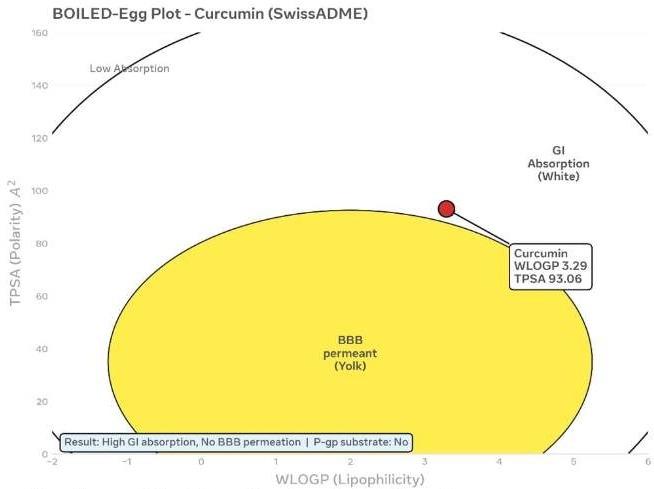
The BOILED-Egg model [10] was used to predict gastrointestinal absorption and blood -brain barrier permeation of curcumin, based on lipophilicity (WLOGP) and polarity (TPSA). Curcumin (red dot) was located in the white region showing high gastrointestinal absorption and outside the yellow region, indicating no blood-brain barrier permeation. This was consistent with SwissADME values.
3.5 Molecular Docking
Curcumin was docked against BRCA1 (1JNX) using CB-Dock2. The best cavity for curcumin, cavity C1 with a volume of 225 ų, gave the best binding pose with a Vina score of -6.2 kcal/mol. The second cavity, C3 with a volume of 94 ų, gave a Vina score of -6.0 kcal/mol. The lowest energy for C1 indicates strong binding between curcumin and the BRCT domain of BRCA1. Details are given in Table 5.
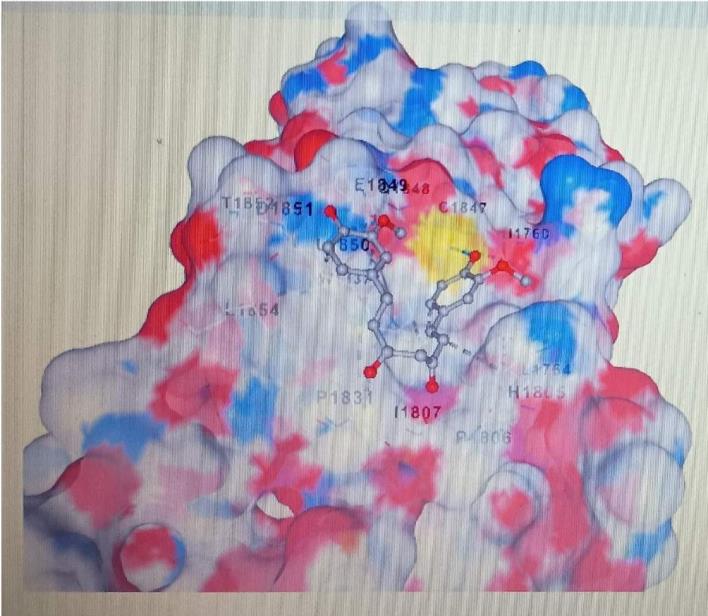
Note: Curcumin fits inside the BRCT binding cavity, interacting with surrounding residues.
4. DISCUSSION
This in-silico study was carried out to assess curcumin as a modulator of the BRCA1 BRCT domain, a part involved in DNA repair and tumour suppression. The BRCA1 BRCT domain (PDB ID: 1JNX) was chosen because it plays a role in protein interactions needed fo r recombination repair. When the BRCA1 BRCT domain is disrupted, the risk of breast and ovarian cancers increases. That makes the BRCA1 BRCT domain a relevant target for drug development.
The physicochemical and ADME properties of curcumin were analyzed using SwissADME. The results support curcumin's drug-like behaviour. Curcumin has a molecular weight of 368.38 g/mol, a WLOGP value of 3.29 and a TPSA of 93.06 Ų. Curcumin satisfies Lipinski's rule of five with no violations [8], indicating a balance between lipophilicity and polarity that is favorable for absorption and bioavailability.
The BOILED-Egg plot provides insight into curcumin's behaviour [10]. Curcumin is located in the white region, meaning curcumin is likely to be absorbed in the gastrointestinal tract. Curcumin also lies outside the yolk, indicating curcumin does not cross the blood-brain barrier. This is beneficial for treating breast cancer, where systemic exposure is desired and central nervous system effects should be avoided. Curcumin is predicted NOT to be a P-glycoprotein substrate (P-gp substrate: No, Table 4), suggesting efflux is less likely to reduce curcumin concentration. However, curcumin is still known for poor aqueous solubility and rapid metabolism, so strategies like nanoparticle or liposome formulations may still be needed to improve curcumin delivery [9].
Molecular docking using CB-Dock2 showed that curcumin interacts with the BRCA1 BRCT domain. The best binding pose was found in cavity C1, with a Vina score of -6.2 kcal/mol, a cavity volume of 225 ų and a center at coordinates (19, 69, 27). The second cavity, C3, gave a Vina score of -6.0 kcal/mol (Table 5). A binding energy of -6.2 kcal/mol suggests curcumin has a binding affinity comparable to other plant-derived compounds studied against BRCA1 in previous in-silico work. The interaction mainly involves hydrophobic contacts and hydrogen bonding within the phosphopeptide-binding groove. This suggests that curcumin may interfere with the protein interactions mediated by BRCA1, potentially disrupting DNA repair signalling in cancer cells.
However, curcumin is known to have poor aqueous solubility and undergoes rapid metabolism, which limits its bioavailability. Even though in-silico predictions look promising, these results should be seen as an indication of curcumin's binding potential, not proof of curcumin's effectiveness.
Limitations:
- This study is purely computational. No in-vitro or in-vivo validation was performed.
- Docking gives a static binding pose. It does not show protein flexibility or binding stability over time.
- ADME predictions are based on models. Actual absorption, metabolism and bioavailability may differ in humans.
- Curcumin has poor aqueous solubility and rapid metabolism, which limits its bioavailability despite good in-silico scores.
- Only one target structure (1JNX) and one ligand (curcumin) were studied. No comparison with standard drugs was done.
Future Scope:
- A 100 ns molecular dynamics simulation followed by MM-PBSA binding free energy calculations is recommended to confirm stability of the curcumin-BRCA1 complex.
- In-vitro studies on cytotoxicity and BRCA1 expression in MCF-7 breast cancer cell lines should be conducted to validate curcumin findings.
- Formulation studies using nanoparticles or liposomes should be explored to improve curcumin solubility and delivery.
- Comparison with known BRCA1 inhibitors and testing of curcumin analogues may help identify more potent lead compounds.
5. CONCLUSION
Curcumin meets all drug-likeness criteria, shows high gastrointestinal absorption without blood-brain barrier penetration, and binds to the BRCA1 BRCT domain (1JNX) with a binding affinity of -6.2 kcal/mol in cavity C1. This suggests that curcumin could be a lead compound for BRCA1-targeted breast cancer therapy. However, further molecular dynamics simulations and experimental studies are needed to confirm curcumin's potential.
REFERENCES
- National Center for Biotechnology Information. PubChem Compound Summary for CID 969516, Curcumin. PubChem Database. https://pubchem.ncbi.nlm.nih.gov/compound/969516
- RCSB Protein Data Bank. 1JNX: Crystal structure of the BRCT repeat region from the breast cancer associated protein, BRCA1. https://www.rcsb.org/structure/1JNX
- Swiss Institute of Bioinformatics. SwissADME web tool. https://www.swissadme.ch/
- CB-Dock2: Blind protein-ligand docking web server. https://cadd.labshare.cn/cb-dock2/
- Williams RS, Green R, Glover JNM. Crystal structure of the BRCT repeat region from the breast cancer-associated protein BRCA1. Nat Struct Biol. 2001;8(10):838-842. https://doi.org/10.1038/nsb1001-838
- Daina A, Michielin O, Zoete V. SwissADME: a free web tool to evaluate pharmacokinetics, drug-likeness and medicinal chemistry friendliness of small molecules. Sci Rep. 2017;7:42717. https://doi.org/10.1038/srep42717
- Liu Y, Yang X, Gan J, Chen S, Xiao ZX, Cao Y. CB-Dock2: improved protein-ligand blind docking by integrating cavity detection, docking and homologous template fitting. Nucleic Acids Res. 2022;50(W1):W159-W164. https://doi.org/10.1093/nar/gkac394
- Lipinski CA, Lombardo F, Dominy BW, Feeney PJ. Experimental and computational approaches to estimate solubility and permeability in drug discovery and development settings. Adv Drug Deliv Rev. 2001;46(1-3):3-26. https://doi.org/10.1016/S0169-409X(00)00129-0
- Hewlings SJ, Kalman DS. Curcumin: A review of its effects on human health. Foods. 2017;6(10):92. https://doi.org/10.3390/foods6100092
- Daina A, Zoete V. A BOILED-Egg to predict gastrointestinal absorption and brain penetration of small molecules. ChemMedChem. 2016;11(11):1117-1121. https://doi.org/10.1002/cmdc.201600182
© 2026 The Author(s). Open access under the Creative Commons Attribution 4.0 International License (CC BY 4.0). This HTML text was made from the published PDF so it can be read on any device; the PDF is the version of record. A figure or table that could not be reproduced exactly here links to its page in the PDF.